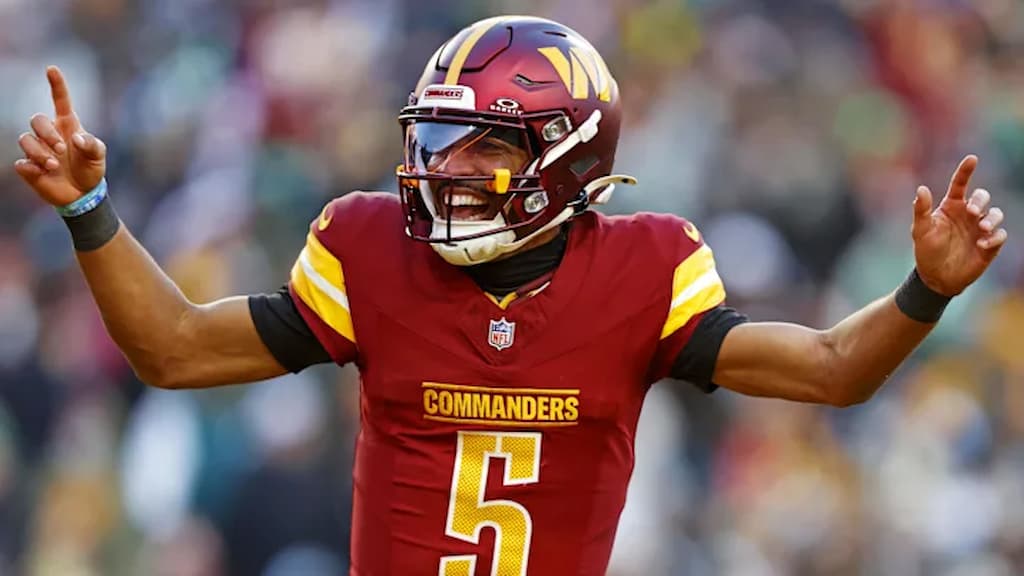
The Washington Commanders have experienced high peaks, deep struggles, and significant transformation throughout their long NFL tenure.
Established in 1932, the franchise became one of football’s early powerhouses with championship success in the 1930s and 1940s. It later rose again in the 1980s and early 1990s, with three Super Bowl wins coming behind legendary coaching and Hall of Fame talent. Washington teams have produced iconic moments, fierce defenses, and memorable players whose impact extends well beyond the field.
The franchise’s modern identity has shifted through multiple eras, stadium changes, ownership transitions, and, most recently, a new name and direction aimed at rebuilding competitiveness and regaining fan trust. Washington supporters remain passionate and loyal, hoping to see consistency return to a team with a rich and sometimes complicated history.
From Slingin’ Sammy Baugh to modern stars like Terry McLaurin, the Commanders’ story blends historical greatness with the continued pursuit of sustained success. Washington’s legacy is still being written, and the team’s fanbase remain eager for the next era of winning football.
Where Do the Washington Commanders Play?
The Commanders play home games at Northwest Stadium in Landover, Maryland. Opened in 1997 and formerly known as FedExField, the outdoor venue has been home to many memorable games, division titles, and playoff appearances.
Discussions surrounding potential future stadium plans have increased in recent years, as the team explores modernizing its game-day experience and creating a stronger home-field advantage.
History of the Washington Commanders
Founded in 1932 as the Boston Braves before relocating to Washington in 1937, the franchise was built early around quarterback Sammy Baugh. Baugh’s all-around play helped lead Washington to championships in 1937 and 1942. He revolutionized the forward pass and remains one of the most important figures in early NFL history.
After postseason appearances throughout the 1940s and 1950s, the team entered periods of inconsistency, though George Allen’s tenure in the 1970s brought a period of sustained success and the team’s first Super Bowl appearance, a loss to the Miami Dolphins in Super Bowl VII.
Joe Gibbs later elevated Washington to championship prominence, guiding the team to three Super Bowl victories following the 1982 (vs. the Dolphins), 1987 (vs. the Denver Broncos), and 1991 (vs. the Buffalo Bills) seasons with different starting quarterbacks each time. Washington’s physical offensive lines, known as “The Hogs,” powered dominant run games and paved the way for sustained success.
The 2000s and 2010s brought mixed results with various coaching changes, free-agency swings, and flashes of success, including playoff seasons behind Robert Griffin III and later with Taylor Heinicke at the helm.
In 2022, the franchise officially adopted the Washington Commanders name, beginning a new chapter.
Recent seasons have centered on developing young talent and reshaping leadership on and off the field. A new ownership group arrived in 2023, giving fans renewed optimism that Washington can return to relevance with stability, strong drafting, and a clear long-term vision.
That optimism was immediately rewarded with an unexpected run to the NFC Championship Game in the 2024 season, led by rookie quarterback Jayden Daniels. The team fell short against the Philadelphia Eagles, but the team’s success in Dan Quinn’s first season as head coach showed potential and a possible foundation for even more.
Interesting Washington Commanders Facts & Franchise Milestones
- Founded in 1932 as the Boston Braves
- Relocated to Washington in 1937
- Three Super Bowl championships (XVII, XXII, XXVI)
- Five total NFL championships including pre–Super Bowl era titles
- Joe Gibbs led the team to all three Super Bowl victories
- Known historically for dominant offensive line “The Hogs”
- Formerly the Redskins, rebranded to Commanders in 2022
- FedExField has been the home venue since 1997
Notable Washington Commanders Players & Coaches
Notable Players
Sammy Baugh, Quarterback/Defensive Back/Punter (1937–1952)
Sammy Baugh changed the game with passing efficiency, accuracy, and versatility. He led Washington to championships in 1937 and 1942 and set numerous records during his career. Baugh is regarded as one of the most influential players in NFL history.
Charley Taylor, Wide Receiver (1964–1977)
A smooth route runner with elite hands, Charley Taylor retired as the NFL’s all-time leader in receptions. He helped lead Washington to the postseason multiple times and remains one of the most accomplished offensive players in Commanders history.
John Riggins, Running Back (1976–1979, 1981–1985)
A bruising runner known for power and playoff performances, John Riggins delivered one of the most iconic Super Bowl moments with his game-winning run in Super Bowl XVII. His physical style and longevity cemented him as a franchise favorite.
Darrell Green, Cornerback (1983–2002)
Green’s rare speed and longevity made him a mainstay in Washington’s secondary for two decades. Known for discipline and elite coverage skills, he played 20 seasons and participated in multiple championship runs.
Art Monk, Wide Receiver (1980–1993)
A consistent and reliable pass catcher, Art Monk became the first player to record over 100 receptions in a season. He played a major role in all three Super Bowl titles under Joe Gibbs and retired as one of the game’s most respected receivers.
Joe Theismann, Quarterback (1974–1985)
Theismann led Washington to a championship victory in Super Bowl XVII and earned NFL MVP honors in 1983. His leadership, mobility, and command of the offense helped anchor the early 1980s success.
Sonny Jurgensen, Quarterback (1964–1974)
Jurgensen was a pure passer with elite arm talent and five league passing titles. His deep-ball accuracy and flair made him one of the franchise’s most beloved quarterbacks.
Ken Houston, Safety (1973–1980)
Houston was a Hall of Fame safety known for range, instincts, and playmaking. He was a defensive anchor of the 1970s teams and one of the greatest safeties to ever play.
Sean Taylor, Safety (2004–2007)
One of the most talented defensive backs of his era, Sean Taylor was known for range, physical tackling, and game-changing instincts. His tragic, senseless murder at just 24 ended a promising career, but his impact remains deeply felt by fans and players.
Terry McLaurin, Wide Receiver (2019–present)
Terry McLaurin has been a bright spot for Washington as it has transitioned into its new era as the Commanders. His consistency, professionalism, and reliability through several starting quarterbacks make him a cornerstone of the modern roster.
Notable Coaches
Ray Flaherty (1936–1942)
Flaherty led Washington to two NFL championships and played a key role in establishing early franchise dominance.
Vince Lombardi (1969)
Lombardi brought immediate improvement and a new standard of professionalism. But before he could fully make his imprint, he died of cancer prior to the 1970 season. However, his impact was felt long after his tenure, as he set the groundwork for future expectations.
George Allen (1971–1977)
Allen was known for veteran-focused roster building and defensive success. He guided Washington to five playoff appearances in seven seasons and the franchise’s first Super Bowl berth.
Joe Gibbs (1981–1992, 2004–2007)
Gibbs is the most accomplished coach in Commanders history, leading Washington to three Super Bowl championships. His balanced offenses and disciplined approach shaped one of the NFL’s dominant teams of the 1980s and early 1990s.
Outside of football, Gibbs is one of the most successful team owners in NASCAR history, as his drivers have won several Cup Series championships and well over 200 races since the team was established in 1992.