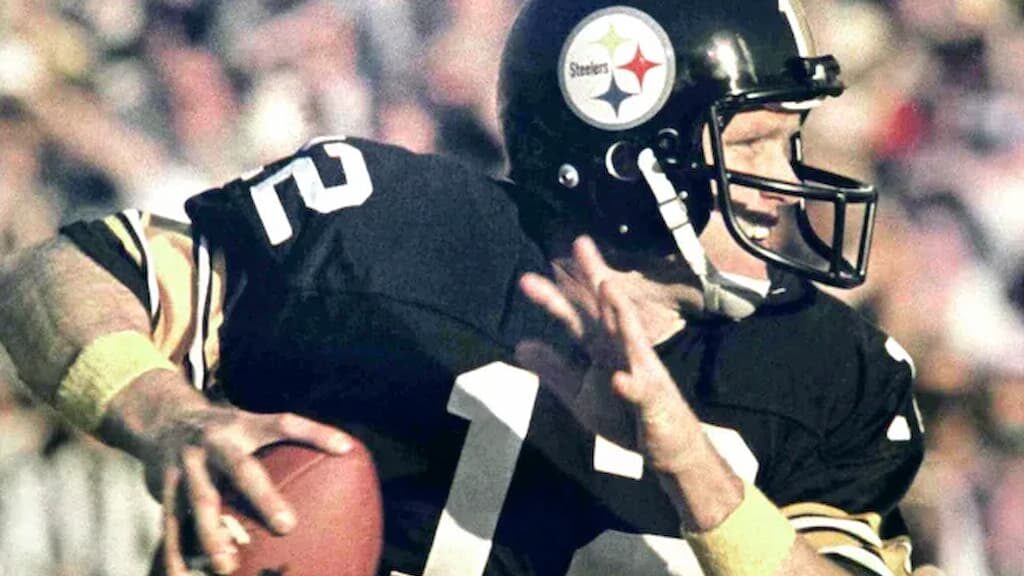
Few franchises in professional sports carry the weight of history, tradition, and expectation quite like the Pittsburgh Steelers.
Formed in 1933 as the Pittsburgh Pirates before adopting their current moniker in 1940, the team spent decades fighting for relevance in the young NFL.
But under coach Chuck Noll, the Steelers became a championship contender and ushered in the franchise’s evolution into one of the NFL’s most successful and culturally impactful organizations.
Their hard-nosed identity of the Steelers mirrors the steel mills that once defined the city of Pittsburgh, creating a football culture rooted in toughness, work ethic, and blue-collar pride.
The Steelers became a dynasty in the 1970s, powered by a generational defense, masterful coaching, and a roster loaded with future Hall of Famers.
In later decades, the franchise continued to remain competitive through consistent leadership and strong drafting. The Bill Cowher era brought renewed success and another Super Bowl victory, while Mike Tomlin brought a sixth title to Steel City.
From Terry Bradshaw and Franco Harris to Ben Roethlisberger and Troy Polamalu, the franchise’s lineage of iconic players speaks for itself. Defense and discipline, and smart roster construction are the backbone of the Steelers’ longstanding success.
They have designed a blueprint other franchise often attempt to emulate. The Terrible Towel-waving Steeler Nation is one of the NFL’s most passionate fanbases, and expectations are always high in Pittsburgh are always high, for good reason.
Where Do the Pittsburgh Steelers Play?
The Pittsburgh Steelers play at Acrisure Stadium, located along the North Shore of the Ohio River in Pittsburgh, Pennsylvania.
Known for its open-air design and cold-weather environment, it has earned a reputation as a tough place for visiting teams, especially late in the season. The stadium seats over 68,000 fans and provides a loud, energetic atmosphere that embodies the spirit of Steeler Nation.
History of the Pittsburgh Steelers
The Steelers’ early years were defined by struggles, with the franchise failing to win a playoff game for its first four decades.
Everything changed in Pittsburgh in the 1970s when head coach Chuck Noll took the Steelers to the top and orchestrated one of the greatest team rebuilds in NFL history. Pittsburgh won four Super Bowls between 1974 and 1979, defeating the Minnesota Vikings in Super Bowl IX, the Dallas Cowboys in Super Bowls X and XIII, and the Los Angeles Rams in Super Bowl XIV.
Those title-winning teams were powered by the Steel Curtain defense and an offense led by quarterback Terry Bradshaw running back Franco Harris, and wide receiver Lynn Swann.
The 1980s featured transition years, but more success came in the 1990s. Under Bill Cowher, who replaced Noll in 1992, the Steelers reached Super Bowl XXX but fell short against the Cowboys.
The fifth title would finally come after more than two and a half decades. In Cowher’s penultimate season, a young Ben Roethlisberger and the Steelers defeated the Seattle Seahawks in Super Bowl XL.
Mike Tomlin, who succeeded Cowher in 2007, continued the success. In just his second season in Pittsburgh, the Steelers won their sixth Lombardi Trophy with a last-minute win over the Arizona Cardinals in Super Bowl XLII.
Another Super Bowl appearance came in the 2010 season, but the Green Bay Packers and future Steelers quarterback Aaron Rodgers came out on top.
Modern Steelers teams have remained contenders, built around strong drafting, defensive talent, and one of the longest stretches of coaching continuity in NFL history. The franchise continues to chase additional championships while maintaining its identity rooted in physical play and resilience.
Interesting Facts & Franchise Milestones
- Founded in 1933 as the Pittsburgh Pirates
- First team to win four Super Bowls and later the first to win six
- Home of the famous Steel Curtain defense of the 1970s
- Chuck Noll, Bill Cowher, and Mike Tomlin have been the only head coaches since 1969
- Franco Harris’ Immaculate Reception is widely considered one of the greatest plays in NFL history
- More than 25 Hall of Famers have played or coached for Pittsburgh
- The Terrible Towel is one of the most recognizable fan traditions in sports
Notable Pittsburgh Steelers Players & Coaches
Notable Players
Joe Greene, Defensive Tackle (1969–1981)
“Mean Joe” Greene anchored the Steel Curtain with intensity and dominance, setting the tone for Pittsburgh’s defensive identity. His presence elevated the Steelers from struggling franchise to powerhouse, and his legacy remains iconic.
Mel Blount, Cornerback (1970–1983)
Blount redefined defensive back play with physical coverage ability so dominant that rules were later created to limit contact. He was a shutdown defender who helped secure four championships.
Terry Bradshaw, Quarterback (1970–1983)
Terry Bradshaw led the Steelers to four Super Bowl championships and became one of the defining quarterbacks of his era. Known for his toughness and ability to perform under pressure, he remains one of the most successful postseason quarterbacks in NFL history.
Franco Harris, Running Back (1972–1983)
Harris became a central force in the Steelers’ dynasty, known especially for the “Immaculate Reception” against the Oakland Raiders in the playoffs in his rookie season.
Beyond his role in one of the greatest plays in Steelers history and NFL history, Harris rushed for over 12,000 yards in his career and remains one of the most beloved players to call Pittsburgh home.
Jack Lambert, Linebacker (1974–1984)
Lambert played with unmatched physicality and leadership, becoming the emotional core of the 1970s defense. His intensity and fearsome style made him one of the most respected linebackers ever to play.
Hines Ward, Wide Receiver (1998–2011)
Ward built his reputation as a tough, reliable receiver and an exceptional blocker. He ranks among the franchise’s leaders in receptions and receiving yards and was named Super Bowl XL MVP.
Troy Polamalu, Safety (2003–2014)
With instinctive playmaking, speed, and versatility, Polamalu became one of the greats of his era. He became a symbol of Steelers football, regularly making game-changing plays that thrilled Pittsburgh.
Ben Roethlisberger, Quarterback (2004–2021)
Roethlisberger led Pittsburgh to three Super Bowl appearances and two championships. His ability to extend plays and produce in clutch moments solidified him as the defining quarterback of the modern Steelers era.
Notable Coaches
Chuck Noll (1969–1991)
Noll built the 1970s dynasty through exceptional drafting and disciplined coaching. Beyond the four titles, the Steelers won 10 AFC Central titles, made 12 playoff appearances, and had 15 winning seasons.
Bill Cowher (1992–2006)
Cowher restored the Steelers to championship form, emphasizing physical defense and balance in his tenure in Pittsburgh. He led the team to two Super Bowls, winning one, and was known for consistency and his fiery leadership.
Mike Tomlin (2007–present)
Tomlin brought his own Super Bowl win early in his tenure and has kept the team competitive nearly every season. His player-focused leadership and steady success continue to define modern Steelers football.