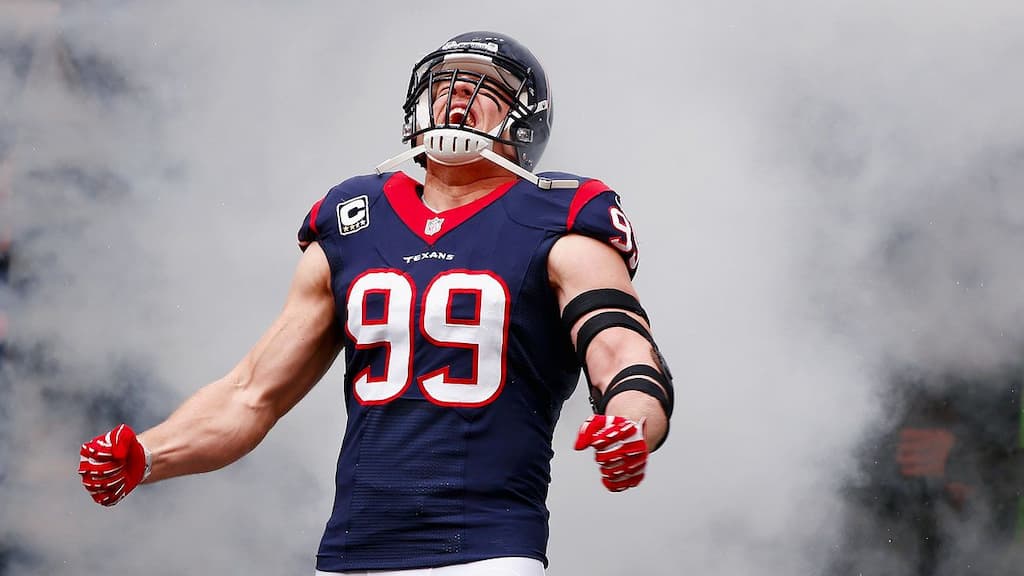
The Houston Texans may be a young team, but their story features significant twists, turns, ups, and downs. It is one of steady growth, passionate fan support, and evolution.
Officially joining the NFL as an expansion team in 2002, the Texans are the most recent addition to the league, as of 2025. They brought professional football back to Houston after the Oilers relocated to Tennessee. In just a short time, the organization has carved out its own place in the league with memorable stars and standout defensive talent.
Over the years, Houston has developed a reputation for hard-nosed defense and dynamic playmakers. The 2010s featured dominant pass-rush units, multiple division titles, and renowned players such as J.J. Watt, Jadeveon Clowney, and DeAndre Hopkins.
While the team continues building toward sustainable championship contention, optimism remains high as new talent and coaching leadership shape the next chapter.
Texans fans have embraced the franchise with energy and loyalty. Whether through AFC South rivalries, playoff pushes, or rebuilding stretches, the city of Houston remains all-in. From tailgates to sold-out home games, supporters fuel a football culture that grows stronger each season.
Today, the Houston Texans look ahead with young cornerstones, revamped leadership, and a commitment to building a roster capable of competing deep into January. A relatively new franchise compared to league originals, Houston stands poised to define its future rather than rely on its past. That is an exciting prospect for a fan base ready for greatness.
Where Do the Houston Texans Play?
The Houston Texans play their home games at NRG Stadium, a modern facility known for its retractable roof and electric game-day environment. Opened in 2002, the stadium seats over 71,000 fans and was the first NFL venue with a fully retractable roof, offering comfort in Houston’s challenging heat and humidity.
Beyond NFL Sundays, NRG Stadium hosts major events including college football bowl games, international soccer matches, rodeo events, and multiple Super Bowls.
The venue’s design, atmosphere, and technology make it one of the premier stadiums in the league, giving Houston a distinct home-field advantage.
History of the Houston Texans
The Houston Texans were awarded to businessman Bob McNair in 1999, restoring professional football to the city after the departure of the Oilers. The team officially debuted in 2002, making their mark immediately by defeating the Dallas Cowboys in their first regular-season game.
During the early years, the Texans focused on building through the draft, gradually shaping a competitive roster. A breakthrough arrived in 2011 under head coach Gary Kubiak when Houston won its first AFC South title and secured its inaugural playoff victory.
Led by defensive standout J.J. Watt, the team continued to contend for division championships through the mid-2010s, developing a reputation for disruptive defense and resilient play.
Watt became the face of the franchise, earning NFL Defensive Player of the Year honors three times and delivering some of the most dominant individual seasons in NFL history. Alongside other stars, Houston enjoyed several playoff appearances throughout the decade, keeping the franchise consistently competitive.
The late 2010s brought memorable offensive performances and high-profile wins, while recent seasons have signaled a new era focused on youth, development, and long-term growth. With emerging talent and fresh leadership, the Texans continue pushing to establish themselves among the league’s top contenders.
Interesting Facts & Franchise Milestones for the Houston Texans
- Established as the NFL’s 32nd franchise and began play in 2002
- Won their first regular-season game against the Dallas Cowboys
- Claimed six AFC South titles in the 2010s (2011, 2012, 2015, 2016, 2018, 2019)
- First playoff win came in 2011
- NRG Stadium was the first NFL stadium with a retractable roof
- J.J. Watt won three NFL Defensive Player of the Year awards as a Texan
Notable Houston Texans Players and Coaches
Notable Players
Andre Johnson, Wide Receiver (2003–2014)
Andre Johnson was the Texans’ first true superstar receiver, known for physicality, elite route running, and consistency. He played a key role in the formative years of the Texans, surviving hard seasons early on to become a key part of the success Houston had in the latter half of his time there.
A seven-time Pro Bowler, he led the NFL in receiving yards twice. After one-season stints with the rival Indianapolis Colts and Tennessee Titans, Johnson retired as one of the most productive wideouts of his generation. In 2024, he became the first player in franchise history to be inducted into the Pro Football Hall of Fame.
J.J. Watt, Defensive End (2011–2020)
J.J. Watt became the most iconic player in Texans history, redefining defensive dominance with relentless motor, leadership, and highlight-reel plays. A three-time Defensive Player of the Year, Watt recorded multiple 20-sack seasons and served as the heart of Houston’s identity during its most successful era.
Arian Foster, Running Back (2009–2015)
Arian Foster quickly rose from undrafted free agent to one of the league’s most dynamic running backs. With vision, patience, and versatility, he led the NFL in rushing in 2010 and earned multiple Pro Bowl selections while powering Houston’s offense during playoff seasons.
DeAndre Hopkins, Wide Receiver (2013–2019)
DeAndre Hopkins became a matchup nightmare with incredible contested-catch ability and reliable hands. A perennial All-Pro, he delivered highlight catches and big-game performances, helping drive the Texans’ offense in the late 2010s.
Notable Coaches
Gary Kubiak (2006–2013)
The Texans had their first winning season under Kubiak in 2009, and further success would come as Houston made its first two playoff appearances and captured its first division titles in 2011 and 2012. Kubiak’s offenses emphasized balance, strong run play, and efficiency, guiding Houston to multiple postseason appearances and playoff victories.
Bill O’Brien (2014–2020)
In O’Brien’s tenure in Houston, the Texans won four division titles and playoff trips. His tenure featured star-powered lineups and clutch performances, keeping Houston in the postseason conversation throughout much of the mid-late 2010s.