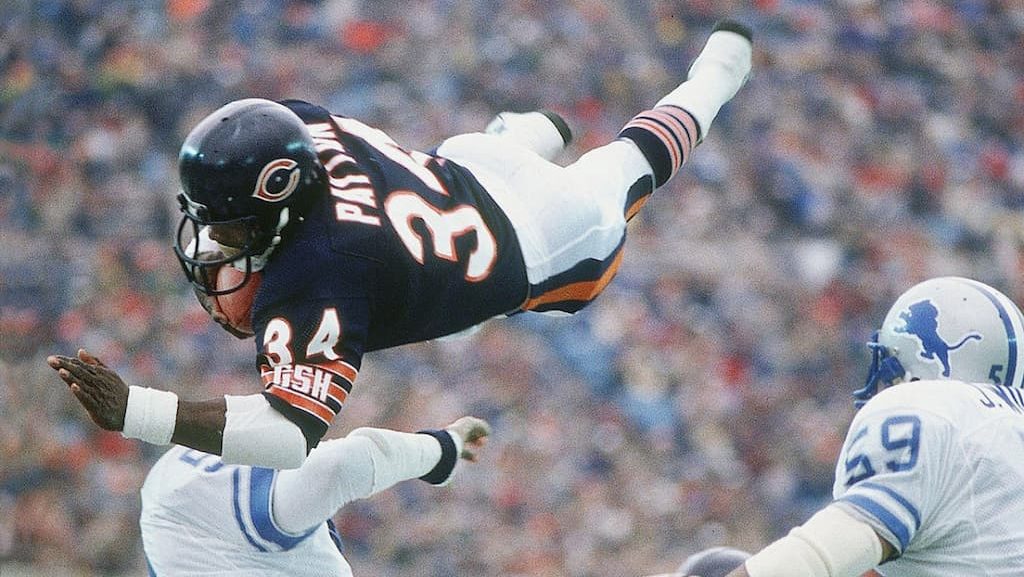
The Chicago Bears stand as one of the NFL’s most historic and tradition-rich franchises. Founded in 1920 as the Decatur Staleys before relocating to Chicago one year later, the team helped shape the early identity of professional football.
Known for physical play, defensive excellence, and passionate fan support, the Bears carry a legacy that spans more than a century.
Chicago’s fanbase, united under the “Monsters of the Midway” banner, remains one of the league’s most devoted. Generations of supporters have filled Soldier Field through rebuilding efforts, championship runs, and some of the most iconic defensive eras the NFL has ever seen. The franchise embodies toughness, resilience, and a deep connection to the city itself.
Today, the Chicago Bears continue to balance their celebrated past with efforts to build a modern, competitive roster. Their history provides a foundation for the future, and the organization’s commitment to developing young talent and strong defensive identity keeps supporters optimistic every season.
Where Do the Chicago Bears Play?
The Chicago Bears play their home games at Soldier Field, one of the most recognizable venues in American sports. Located near Lake Michigan and the city’s museum campus, Soldier Field blends historic character with modern updates and seats more than 61,000 fans.
Originally opened in 1924, the stadium has hosted numerous iconic sporting events, including NFC playoff games, international soccer matches, and major college football showdowns. A substantial renovation completed in 2003 improved accessibility, player facilities, and fan experience while preserving the venue’s historic columns and lakefront appeal.
Despite frequent weather challenges, ranging from bitter cold to heavy winds, Soldier Field gives the Bears one of the league’s most distinctive home-field advantages.
History of the Chicago Bears
The Chicago Bears’ history begins in 1920 when the team was founded as the Decatur Staleys by George Halas and the A.E. Staley Company.
After moving to Chicago in 1921, the organization became one of the NFL’s foundational franchises. Under Halas, who served as owner, player, and coach, the Bears developed a reputation for physical play and innovative strategy.
During the 1930s and 1940s, Chicago emerged as a dominant force, winning multiple league championships behind stars like Bronko Nagurski and Sid Luckman. The franchise’s emphasis on toughness and defense became embedded in its identity. Halas continued shaping the team through several decades, contributing not only to Bears history but to the NFL’s overall development.
The 1960s and 1970s brought new stars including Gale Sayers, Dick Butkus, and Walter Payton, each of whom helped elevate the team’s national profile.
Success peaked again in 1985 under head coach Mike Ditka. Led by one of the greatest defenses in NFL history, the Bears captured Super Bowl XX in dominant fashion, defeating the New England Patriots 46–10.
Since the 2000s, the Bears have focused on rebuilding through the draft and strong defensive play, highlighted by a 2006 NFC Championship behind head coach Lovie Smith and star linebacker Brian Urlacher. The team continues working to return to consistent playoff contention while honoring its storied past.
Interesting Facts & Franchise Milestones for the Chicago Bears
- One of the NFL’s founding franchises, established in 1920.
- Originally known as the Decatur Staleys before becoming the Chicago Bears in 1922.
- Won nine NFL championships, including Super Bowl XX in the 1985 season.
- Known for a long lineage of elite linebackers and defensive stars.
- Soldier Field is the oldest stadium currently used by an NFL team.
- George Halas recorded more than 300 wins as head coach, a record at his retirement.
Notable Chicago Bears Players and Coaches
Notable Players
Walter Payton, Running Back (1975–1987)
Walter “Sweetness” Payton became the face of the Bears franchise for more than a decade. Known for durability, balance, and elite conditioning, he retired as the NFL’s all-time leading rusher with 16,726 yards. Payton scored 125 total touchdowns, earned the 1977 NFL MVP award, and helped lead Chicago to a Super Bowl XX victory.
Dick Butkus, Linebacker (1965–1973)
Dick Butkus defined the Chicago Bears’ reputation for toughness and physicality. He earned eight Pro Bowl selections and two NFL Defensive Player of the Year awards. Known for relentless pursuit and intimidating hits, Butkus remains one of the most feared defenders in league history and a symbol of Chicago’s defensive identity.
Mike Singletary, Linebacker (1981–1992)
Mike Singletary anchored the dominant 1985 Bears defense and won two NFL Defensive Player of the Year awards. A ten-time Pro Bowler, he played with unmatched intensity and served as the emotional leader of the team’s most celebrated era. His instincts and leadership made him one of the top linebackers of the 1980s.
Brian Urlacher, Linebacker (2000–2012)
Brian Urlacher carried forward the franchise’s linebacker tradition with exceptional athleticism and versatility. The 2005 NFL Defensive Player of the Year earned eight Pro Bowl selections, surpassed 1,300 tackles, and led the Bears to Super Bowl XLI. His speed and instincts helped redefine the modern middle linebacker role.
Notable Coaches
George Halas (1920–1929, 1933–1942, 1946–1955, 1958–1967)
George Halas, known as “Papa Bear,” served as founder, owner, and coach, shaping the Bears into one of the NFL’s most successful early franchises. Across four coaching stints spanning five decades, he earned more than 300 wins and won six NFL championships.
Halas also influenced league rules, strategies, and long-term development, making him one of football’s most important pioneers.
Mike Ditka (1982–1992)
Mike Ditka led the Bears during their most dominant modern era. His tenure produced six NFC Central titles and a Super Bowl XX victory following the legendary 1985 season.
With a fiery coaching style and strong emphasis on defense, Ditka helped create one of the greatest NFL teams ever assembled.
Lovie Smith (2004–2012)
Lovie Smith guided the Bears to three NFC North titles and an appearance in Super Bowl XLI. Known for his disciplined “Tampa 2” defensive philosophy, Smith compiled an 81–63 record in Chicago. His tenure featured strong defensive play, consistent culture, and one of the top units of the mid-2000s.