When betting on the NFL, NBA, and college football, and other major team sports and leagues, many sports bettors face a choice whether to place a wager on the moneyline or the spread if they are betting on one of the teams involved. This choice comes into play whether the bets are being placed at a brick-and-mortar sportsbook or one of the top online sportsbooks, such as BetOnline or Sportsbetting.ag.
Are you new to sports betting? If so, you may not know what moneyline and spread bets are or the similarities and differences between them. Here, we break down moneyline and spread bets to help bettors understand them better. Even if you are an experienced bettor, this guide should help you understand when it is advantageous to take one over the other.
Where Can You Make Moneyline and Spread Bets?
Because moneyline and spread bets are so popular, you can find odds for them at any and all of the best sports betting sites, including sites such as Lucky Rebel, BetOnline, and Everygame.
If you are unfamiliar with any of these sportsbooks, check out our sportsbook reviews for each of them to learn more.
What Does the Point Spread Mean?
So, what is point spread betting? The point spread is a wagering option where the favorite is handicapped by a specific number of points. This is the type of betting market that you most often hear about with football and basketball games.
Spread betting is also popular in hockey, baseball, and soccer. However, different names are used to refer to spread betting in those sports. In MLB betting, the run line refers to the spread.
In NHL betting, the spread is known as the puck line. And in soccer odds, the spread is known as either the goal line or the handicap. So, if you see any of those terms when betting on those sports and leagues, they refer to the spread.
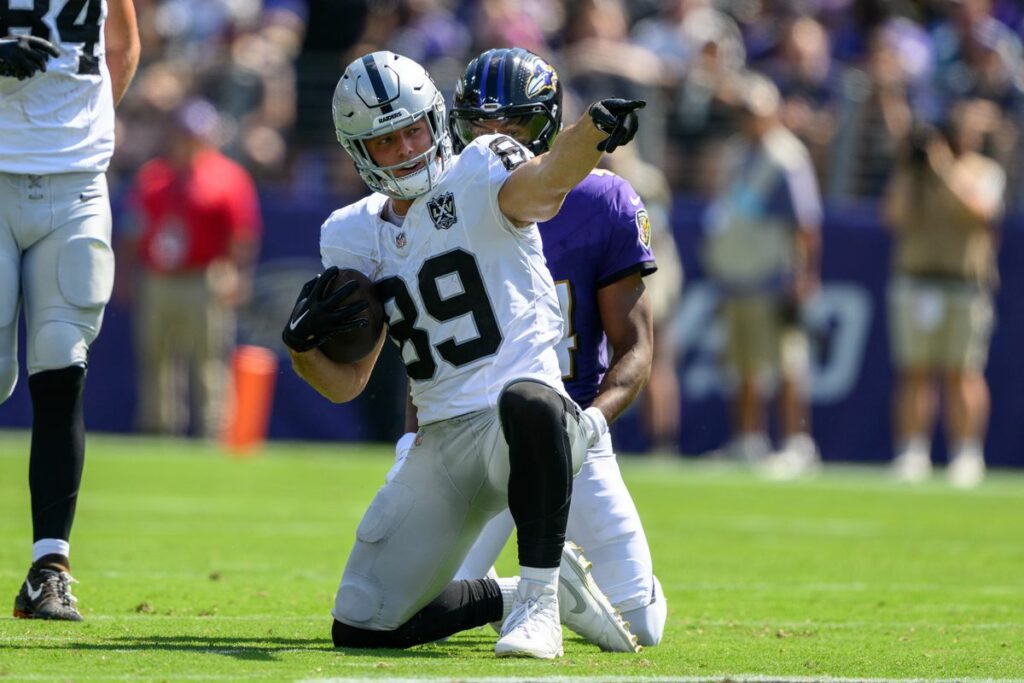
What Is a Point Spread Bet?
Let’s use NFL odds to make an example of point spread betting. At a sportsbook like BetOnline, the point spread for a game between the Las Vegas Raiders and Kansas City Chiefs might look like this:
- Las Vegas Raiders +13.5 (-110)
- Kansas City Chiefs -13.5 (-110)
What does that mean?
In this matchup, oddsmakers see the Chiefs as the much stronger team. To draw betting interest on the Raiders, a handicap must be applied. Expert linemakers have determined that the listed handicap must be applied to even out the game.
When you make a spread bet, you are either laying or taking the points. Do you believe the Chiefs will win by 14 or more points? If so, your bet will be Chiefs -13.5. Betting on the spread favorite is referred to as “laying the points.” On the other side, if you think that the Raiders can keep the game close, your bet will be Raiders +13.5. Betting on the spread underdog is known as “taking the points.”
The number (-110 in this example) beside the spread signifies the odds for each side of the spread. The odds are also known as the juice (a.k.a vig, which is short for vigorish), which is the price that a bettor pays the sportsbook.
One reason why spread betting is advantageous is that if you bet the underdog, they don’t actually have to win the game for your bet to win. Instead, they must be within the posted number. If you bet Raiders +13.5, that means they must lose by 13 or fewer points for your bet to win.
Pushes in Spread Betting
Sometimes, ties, also known as pushes, can come into play with spread betting. Pushes occur when the result matches the spread and therefore neither side wins nor loses. This can only happen if the spread does not have the half-point (a.k.a. the hook).
For example, if the Chiefs are favored by 13 and win 30-17, the result for spread bets on both sides (Chiefs -13 and Raiders +13) is a push. In that situation, all of those bets would be refunded. And if one such bet is part of a parlay, that leg will be graded as a push and will not affect the outcome of the parlay if all other legs win.
To learn even more about point spread betting, check out our spread betting guide. It covers how to read spread odds, how spreads work in different sports, spread betting strategies, and more.
What Does the Moneyline Mean?
Now, let’s use that same game in a moneyline example. What is moneyline betting? A moneyline bet is one where you are solely picking the winner of the game, no matter what the final score ends up being.
What Is a Moneyline Bet?
If you are new to learning how to read moneyline odds, we have another NFL betting example. For a game with a heavy favorite like our example, here is what a moneyline could look like at Bovada, one of the best NFL betting sites:
- Las Vegas Raiders +500
- Kansas City Chiefs -700
The numbers next to each team represent the return in factors of $100.
In this scenario, the Chiefs are likely going to win the game. Because Kansas City is so heavily favored, you will have to wager a significant to get a return. If you wanted to come away with $100 in winnings if the Chiefs win, you would have to bet $500.
If you think the Raiders will pull the upset, a $100 bet would net you $500 in winnings.
To learn much more about the ins and outs of moneyline betting, check out our moneyline betting guide. It covers the basics of what you need to know about moneyline betting, as well as strategies for moneyline bets, valuable resources and tools, and more.
Similarities and Differences Between Moneyline and Spread Betting
So, how are moneyline and spread betting similar?
At a glance, moneyline and spread betting serve a similar purpose: giving you a way to bet on the outcome of a game. Both are classified as side bets, meaning you’re betting on one team or side of a matchup rather than on total points or props.
Similarities Between Moneyline and Spread Betting
- Team-Based Bets: Both types of bets require you to pick a team to back. You’re choosing who you believe will perform better—either by winning outright (moneyline) or by outperforming expectations (spread).
- Pre-Game Markets: Moneyline and spread odds are posted before the game starts and typically don’t fluctuate drastically unless there’s major injury news or late betting action.
- Available in Most Sportsbooks: You will find both betting options offered by all major sportsbooks across virtually all team sports and individual sports in which both options are part of the available betting markets.
- Influenced by Team Strength: Oddsmakers use the perceived gap in quality between two teams to set both the spread and the moneyline. A large spread typically coincides with heavily lopsided moneyline odds.
Differences Between Moneyline and Spread Betting
- Win Conditions: The most critical difference between moneyline and spread bets is the win condition. With moneyline bets, your team simply has to win the game. With spread bets, your team can lose and still cover the spread—or win but fail to cover.
- Risk vs. Reward: Moneyline odds adjust based on each team’s likelihood to win outright. Betting favorites on the moneyline often requires a large risk for a small return, while betting on underdogs offers higher payoutshe spread, on the other hand, levels the playing field with fixed odds (often around -110 for both sides).
- Margin of Victory Matters for Spreads: The spread is designed to account for expected winning margins. It doesn’t matter how much a team wins by in moneyline betting—just that they win. In spread betting, winning big or keeping it close can be the difference between winning and losing your bet.
- Strategic Approach: Bettors who anticipate close games might prefer the spread, especially if there’s uncertainty about who will win. In contrast, if you are confident in a team pulling off an upset or dominating, the moneyline could offer better value.
For example, let’s say the Dallas Cowboys are -3.5 favorites against the New York Giants in an NFL rivalry matchup. If you take the spread, they must win by four or more points. If you take the moneyline, they just need to win—by any margin. However, the return on a moneyline bet would be smaller since they’re expected to win.

Which Option Is Better?
How do those differences impact which bet may be better? Whether or not the moneyline or spread is better depends on the situation and your risk tolerance. In sports betting, risk tolerance is how much of a risk you are comfortable taking for a potential win.
Both options offer advantages depending on the context of the game and your betting strategy.
Moneyline betting is better when:
- You are confident in an underdog pulling off the upset. This is where the value of a high payout shines. This can apply in many situations, including picking March Madness upsets.
- You believe a favorite will win a close game but might not cover the spread. This can regularly apply with MLB run line betting and NHL puck line betting, as one-run and one-goal games are a frequent occurrence.
- You’re betting on sports with low-scoring outcomes, such as soccer, baseball, or hockey. This makes the spread less impactful.
As noted, in MLB or NHL games with tight lines (e.g., -1.5 run/puck lines), it’s common to bet the moneyline instead, since even the best teams don’t always win by multiple scores.
Spread betting is better when:
- You want to minimize risk while betting on a favorite, especially when moneyline odds are steep.
- You think an underdog will perform well enough to cover the spread but may not win outright. This can often happen with betting on college football odds or college basketball odds, especially with home underdogs or big rivalry games.
- You’re betting on high-scoring sports like football or basketball, where point spreads are more predictive and exploitable.
A great use case is when a strong underdog is catching a large spread. Say the Jets are +10.5 against the Bills at home. Even if you think they won’t win, betting on them to keep it within 10 points may be the smarter—and more winnable—play.
How to Choose Between the Two:
- Look at the line and evaluate game flow. Will this be a slower grind-it-out game or a high-scoring shootout? Will it be a close contest or a blowout? If you are making college basketball picks, KenPom and Team Rankings are great betting resources to keep up with stats and metrics that indicate the likely pace and flow of a game.
- Consider injury reports, home/away splits, and matchup history.
- Weigh the risk/reward. Do you want a safer bet with lower return, or are you willing to take on higher risk for the potential of a higher payout?
In many cases, it’s not about one being better than the other. Often, it is about which is better suited for that particular game. A savvy bettor evaluates the matchup and then chooses the market that offers the best value and highest edge.
Conclusion
Understanding the key differences between moneyline and spread betting is essential for making informed sports wagers.
While both markets let you bet on a team’s performance, the criteria for winning and the potential returns vary significantly. The moneyline is straightforward—just pick the winner—while the spread adds complexity by factoring in the margin of victory or defeat.
Neither option is inherently better than the other, ultimately. It all comes down to your strategy, the specific matchup, and your comfort level with risk.
Moneyline bets can be valuable for underdog plays or in low-scoring sports where spreads are tight. Meanwhile, spread bets can provide better value when favorites have steep moneyline odds or when underdogs look likely to keep it close without winning outright.
Each market has its place. Smart, analytical bettors know when to pivot between the two based on context.
As you place your bets—whether they are for March Madness, the NBA playoffs, or early-season MLB odds—take the time to weigh your options. Consider the flow of the game, the teams involved, and where the best value lies. Whether you lay the points or take a shot on the moneyline, the best choice is the one that aligns with your research, your strategy, and your edge.
Learn More About Sports Betting
This guide covers a lot of information that will serve sports betting beginners well, but it is just one of many guides we have for both new and experienced bettors.
Whether you want to learn about over/under bets, prop bets, and other types of bets, sportsbook bonuses, notable sports betting terms and phrases, or sports betting strategies such as hedging and middling, we have you covered.
Do you love to play online slots, blackjack, roulette, and other popular online casino games? Check out our catalog of casino guides and learn all you need to know to play your favorite games at the best online casinos.
Learn More About the Best Online Sportsbooks
- Trusted Online Sportsbooks
 Lucky Rebel Sportsbook Review »
 BetOnline Sportsbook Review »
 Everygame Sportsbook Review »
 SportsBetting Sportsbook Review »
 Bovada Sportsbook Review »
 SportBet Sportsbook Review »
 BetWhale Sportsbook Review »
 BetUS Sportsbook Review »
 BetDSI Sportsbook Review »
 MyBookie Sportsbook Review »
-
 Bookmaker Sportsbook Review »
-
 WagerWeb Sportsbook Review »