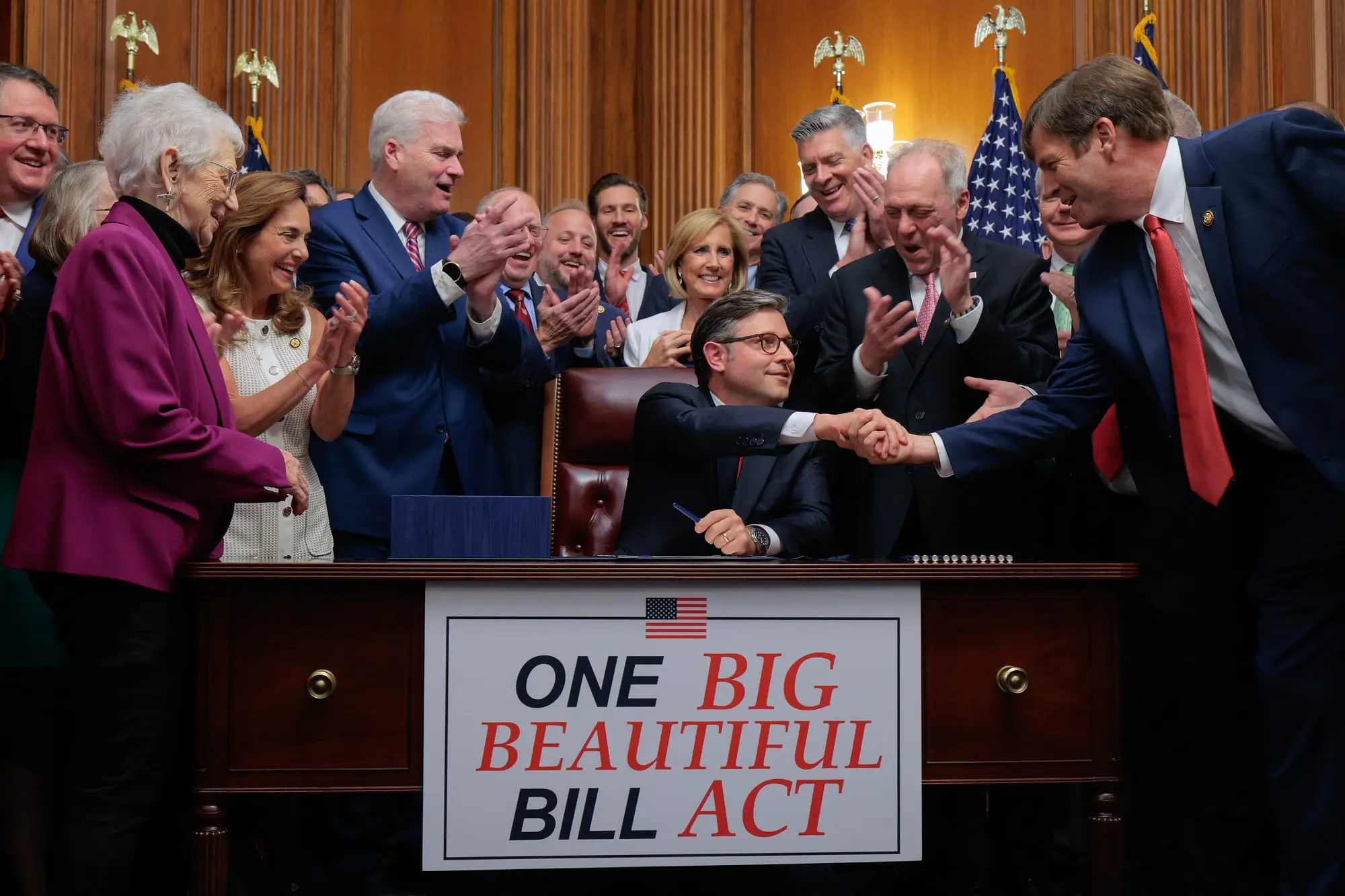
A proposed federal bill known as the “One Big Beautiful Bill” could significantly disrupt the growing U.S. sports betting market. While aiming to regulate digital commerce more effectively, the bill may unintentionally impose new restrictions on online sportsbooks and related platforms.
The bill, introduced in Congress this summer, includes broad language targeting digital gambling operations. Although it doesn’t directly ban online sportsbooks, it introduces sweeping compliance requirements. These include strict data reporting, tax obligations, and tighter banking regulations, which could burden operators.
Professional Gamblers Oppose the ‘One Big Beautiful Bill’
Phil Galfond, a professional poker player, voiced strong opposition to the proposed amendment in a recent X post. “This new amendment to the One Big Beautiful Bill Act would end professional gambling in the U.S. and hurt casual gamblers, too,” he warned, sharing a video that outlined his concerns. “You could pay more in tax than you won. Contact your representative quickly.”
Trump is expected to sign the bill into law on Friday. The amendment drew widespread attention online after the Senate passed it on Tuesday.
One X user illustrated the financial impact of the change. Under the proposed rules, if a gambler earned $200,000 in winnings but lost $210,000, they could only deduct $189,000. As a result, the gambler would owe taxes on $11,000, despite having a net loss of $10,000 for the year.
Galfond elaborated on the issue in a follow-up post. He explained:
“A pro who earns $200k/year might have $3M in winnings and $2.8M in losses. This means earning $200k and being taxed as if they earned $480k. This applies to both recreational and professional gamblers.”
The amendment has sparked concern across the gambling community, with critics urging lawmakers to reconsider its potential effects.
Moreover, industry experts warn that the bill’s vague language could also apply to online casinos. If interpreted broadly, it might classify online casinos as interstate gambling operations subject to federal enforcement.
This could undermine the progress individual states have made in legalizing and regulating digital gambling.
Many Weigh in on the potential impact of the ‘One Big Beautiful Bill’
Many stakeholders in the gaming sector have raised concerns. The American Gaming Association noted that the bill may override existing state laws. It emphasized that states should retain control over their own gambling markets, including online sportsbooks and online casinos.
In states like New Jersey and Pennsylvania, sports betting and online casinos have generated millions in tax revenue. The bill threatens to destabilize that growth. Additionally, real money online casinos provide safe, regulated alternatives to offshore sites. Federal overreach could push players back into the unregulated market.
Supporters of the bill argue that unified regulations will reduce fraud and protect consumers. However, opponents believe it sacrifices state autonomy and market flexibility. Legal analysts also caution that the bill may face constitutional challenges if it overrides state laws without clear justification.
The gambling industry urges lawmakers to reconsider the bill’s implications. They propose amendments that would exempt state-regulated platforms from federal interference.
As the bill moves through Congress, stakeholders continue lobbying for more precise language. Without changes, the One Big Beautiful Bill could hinder innovation and revenue in the U.S. sports betting space.
Online sportsbook and online casino operators are watching closely.